|
About the Collection SC Jews Tell Their Stories Oral History Archives Field Work Files Publications Home |
||||||||||||||||||||||||||||||||||||||||||||||||||||||||||
![]() |
|
|||||||||||||||||||||||||||||||||||||||||||||||||||||||||
|
|
||||||||||||||||||||||||||||||||||||||||||||||||||||||||||
|
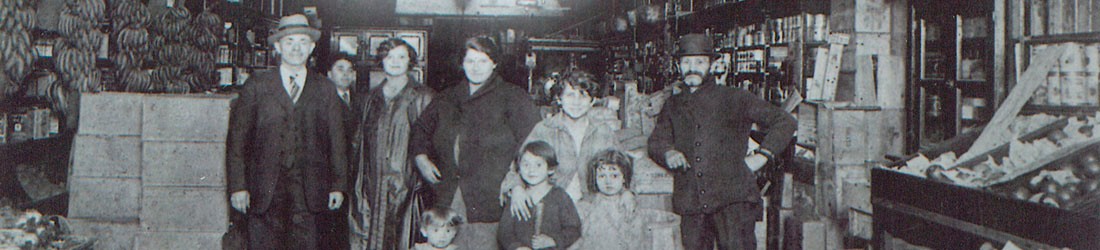
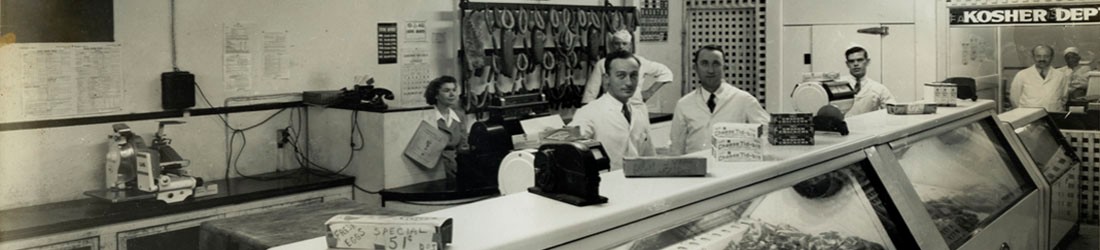
The Shokhet My grandfather was a butcher and a shokhet in Vilna, which was Lithuania sometime, Russia sometime, and, of course, Poland sometime. They needed a shokhet in Charleston and they needed a butcher. He arrived in Ellis Island and people greeted him and told him this is where he should go. So, he came to Charleston and immediately set up a kosher meat market. I dont know if he was the first kosher butcher but I do know he was the first authentic meat market in Charleston. I was told that. Upstairs from the meat market was a minyan room. It seems to me that the older men would meet and have a minyan every evening upstairs from the butcher shop while the women were buying their meat downstairs. The Meat Market The meat market was like a meeting place. We had chairs on one side, sawdust on the floor, live chickens in one window, fish in another window. We had a third window because we had a little section next to that where we used to keep live chickens all the time and ducks and at different times of the year, like the fall of the year, we had turkeys, live turkeys in there. My dad used to make pickles, always kept a big barrel of pickles in the middle of the floor, and people would reach in with their dirty hands and get a pickle out and theyd sit down and eat on it and finally bring a nickel up to the counter. It was a meeting place for a lot of the women also. They would talk about whatever was happening at home or what they were going to make for dinner. Sam Coaxum In the meantime, my grandfather had trained a young colored fellow named Sam Coaxum, who was just a teenager, and he had learned not only to cut meat but to speak Yiddish. So he was able to converse with the older women that came into the butcher shop, so that he knew what they wanted. I remember, as a youngster, they had an occasion of someone coming in who didnt speak English and didnt speak Yiddishthey must have come from another countryand in order to say she wanted something from the leg she held her rear end up to say what she wanted. Ice The iceman would come with these great big blocks of ice and theyd put it above the cooler. It took four men to lift the darn thing and stick it on top, reminiscent of todays refrigerator with the freezer on topa walk-in type thing made out of cork in the inside and racks. Youd hang the beef and the chickens up in there, but you couldnt keep them over three days; you had to sell it or throw it out. We had a trayf market also and anything we didnt sell in three days went down to the Market Square. Now, youve got to remember in those days there wasnt refrigeration like we know it today, and certainly no freezers, so meat was fresh every three days. I remember as a young teenager my dad getting up real early and bringing in the carcasses and I would help him cut those carcasses up to where we could handle them in the walk-in cooler in the back of the store. He would fill orders. People would call up and say what they wanted: I want a dozen veal chops or calf tongue or two pounds of liver. He would package it up and on my way to school in the morningsI had a bicycle with a big basket on the frontI would take it and deliver it in the morning before school. And, of course, I had every dog in Charleston following me because the meat was fresh and blood was pouring out of it. Many a timenobody locked their houses in those in those daysId walk up the steps and go into the house and put the meat in the ice box. People would be sleeping or be busy dressing, whatever. I didnt pay no attention; they didnt pay any attention to me. And Id notice a lot of times the water coming from underneath the ice box. Id pick that little pot [up], dump the water out, put it back, because I knew it would overflow. It seemed like it was part of my job. The Bad House They always knew that kosher chicken or kosher meat was clean and free of disease. Of course, thats what kosher means, you know, its clean. We were closed Saturday. We closed Friday afternoon from about three oclock on. And we opened up after sundown on Saturday night. Wed be busy on Saturday night because everybody wanted chicken for Sunday dinner. The whore houses downtown wanted chicken on Sunday and theyd call up my daddy, and of course he knew where they were, he knew who was ordering, and I used to deliver. And he always warned me, Now, dont you stay too long at the bad house. Id take the chickens down there on Sunday morning. The Handwriting on the Wall The demand slipped quite a bit for kosher meat. The young marrieds werent as kosher as their parents. First of all, they ate out anything even if they kept a kosher home; then after awhile they saw that was fruitless, too. Even my sister kept a kosher home but they ate everything outside. So who are you fooling really? My father saw the handwriting on the wall and he let it go. Of course, we talked. When I came home we talked first about wholesaling and at that time we started talking about freezing things; the equipment had evolved for freezing. We talked about it but my father was so tired of the whole thing. He was worn out. And I said, Okay, just sell it. I have a future. I went to work with a big company when I finished schoolChannelmaster Corporation. The Little Lady Bob Berg was a Jewish fellow out of New York. He had Columbia Liquors. And then there was Mr. Smith, who was a liquor dealer. He was an old bootlegger. This was before I got married, when I had my own liquor businessI would go in there, the wholesale house, and the place would be crowded with men. He was really a rough character, really rough, but dont forget youre still in the South. These men were waiting to get in to see himthey had glass partitionshed look out and see me and said, Lets see the little lady first. This feminism, women who want to be like men, no, no, no, no. Lets see the little lady first. Mr. Smith, I need so-and sosee, liquor was hard to get. I got it. I got it. Behind the Scenes They made their own jewelry. And of course they bought a lot, like all jewelry stores do, but they made their jewelry, a lot of it, and the jewelry that they ordered, as I found out really in the last couple of years, my grandmother had to okay it first before she let it come into the jewelry store. If it was all right with her then it was all right to bring it on into the store. So that sort of shows that she did have a rule but she was one of the behind-the-scenes lady that you didnt know it because he ruled very strongly, had a very strong rule over the entire family, but she was the one that said whether the jewelry could come in or not. Eyeglasses [My grandfather] was a salesman. My mother will tell you that. He was a very very good salesman. But then, the prices were not that astronomical where the people could not afford them. I can remember when my mother went back to school to get a college degree, that was in the middle to late 60s, she used to have some of the students come over to the house and they would study together since she was an older student. And I can remember one time that one of the guys brought his parents over or something and when they heard the name the man reached into his pocket and said, You see these glasses? He said, Your grandfather made these glasses for me and Im still wearing them. You know, Grandpa died in 49 and this was in the 60s, he was still wearing the same glasses. So it shows that the quality of his work had to have been fantastic, so the people were willing to spend money if they knew it was going to last them a lifetime. Those glasses lasted that mans lifetime. Colorblind Haberdasher I sort of developed a memory for colors rather than being able to identify them. I very often just asked the customer, what color was this. And Id tell them Im colorblind. Is that green? No, hed say, thats purple. Most of my people knew I was colorblind. Most of my customers knew that. It became a kind of standing joke. Chicken Feed and Rice My fathers store was on Meeting Street. Ill tell you where it is. Its on the corner of Meeting and Maple Street and at that time Maple Street was a dirt street, Meeting Street was paved with oyster shells. I remember sitting on the front of my fathers steps at the store and seeing them pave Meeting Street with the first coats of asphalt and things of that kind. I remember them laying the sewers on that street there, too, before they did the paving. That was in the 1920s, mid 20s. The main store was a big room, a big roomIm talking about my fathers place. He had ceiling fans. He had an ornate tin ceiling over the fans. Too bad its gone now. The store changed over a period of time but as far back as I can remember it had a big counter where he filled the orders on the counter. He had a candy case. He had the old-type cash registers. Had shelves behind the counter where they had the groceries, teas, and canned goods of various kinds. Then they had a medicine cabinet on one wall where they kept drugs of various kinds, patent drugs, medicine, that kind of thing. On one wall he had bins in which he used to sellused to have chicken feed and rice. I cant remember what else he had in there. And then eventually he had a meat case where he kept meats. Eventually he opened a meat market there and then he had anotherhe had a showcase then, he had a big showcase then. He had two back rooms to the store and he had a hall on the side which led to an entrance from the front of the store so you didnt have to come through the store. One room was a storage room where he kept supplies, groceries, and so on. And he had one of the first automatic hot water heaters. When he built his new house, he had a bathtub and he had showers and he had instant heat, you know. Its about so high, metal cabinet with copper coils and the water ran through the copper coils and then the gas was on a pilot and when the water started flowing the pilot flared up and began heating the coils and so you had instantaneous hot water. By the Seat of His Pants The cash register was about this big. I remember very well because when I was growing up, one of my first things I did in the store was make change. They would sell something and tell me to take out so much and make change for them. They didnt keep any books. They didnt keep any books whatsoever. He was just flying by the seat of his pants, you know. As he needed things he would order things. He would buy on credit and he gave credit too in the grocery store. He wrote down the credit but he didnt have any ledgers for that. He had a spindle in the store on which he would write down what the person owed and stick it on there. And then he eventually gathered them all together and figured up what the person owed him. He used to have alsoyou may have seen in some of the storeshe had a cookie case. Theyd be maybe about four feet tall and they would be able to put in there boxes, cookies with a glass covering that you open it and go in and take them out. Sold a lot of one-cent cookies and one-cent candies in the store. And it was a place usually, much more so later than earlier I think, that people used to come in and just schmooze, hang around the store, talk. They would just lean on the counter and talk. That was a time, I must have been about sixteen, seventeen years old, and there used to be some regulars whod come in all the time, almost every night, drink a beer or two, stand around and schmooze, thats all. And one worked at the Navy Yard and he used to tell them all the things that were going on at the Navy Yard that he didnt think was right but he was a part of it. And there was one that used to work at the Clyde Line, the steamship company. He was also a butcher. A man named Siemers. Not Jewish. None of these were Jewish. We lived in a neighborhood that was just growing up back in those days. You call this lucky? When we moved from Yonges Island to Meeting Street, my mother told me that an insurance man came inMamas social life was that all these salesmen would come in for their Coca-Cola and slice of bologna or whatever, and so she would become friends with them. So this Christian insurance man said, Jews are just so lucky, so lucky. You send your children to college, I cant send my children to college. And my mother said, You call this lucky? I wake up at five in the morning and I go to bed at twelve and one oclock at night. You think Im lucky? I do remember just that. I do remember that. Thanksgiving [My mother] always said we were good children, that we didntwe werent extravagant. But then as we got older she bought us very nice clothes. I never had nice clothes going to college, but if there was a dance, or if I had a date, she was smart enough to know where to put her money. Thanksgiving my brother and sister and I had lovely clothes, wed all have dates to a dance, Thanksgiving dance. At intermission, without any of us talking to the other one, we all showed up at the grocery store. I said to my date, Do you mind if I go by to tell my mother and see how she is? Anna did the same thing with her date. Leon did the same thing with his date. And none of us had checked, we just all showed up there. We kind of reinforced her. She got a lot out of life, but she worked very hard, and she reared us sort ofshe didnt let us slave in that store, you know. The Break-in So one time we were broken into, and Mama knew just who it was because she had heard voices downstairs. This is how we lived. Somebody broke in and just made a mess of the upstairs. My sister Anna happened to have a date that night with a Jewish fellow who owned a pawn shop, Roy Schraibmansomebody that was in a pawn shop. When we told him what was stolena watch or whatnotthe person came into his pawn shop the next day with the watch and stuff, so he called the police. Now, you know who went to court to represent us? I did. I was a freshman, maybe, in college, or maybe still in high school. A little girl. I knew where the court was, I went there. The mother of this black fellow worked for a very prominent family, and she was there with her employer, so you know what chance I hadbut I described the whole thing and he got eighteen months, and then he came back in the store, he was a customer again. I shot Mr. Rosen. [My father] got held up one timeliquor stores were a target of all the criminals in those dayshe got held up one time, but he wasnt harmed. The next time he got held up, he was shot three times. None of them had hit a vital spotit was a .22, so it wasnt a powerful gunand, of course, he was up talking to everybody the next day. Couple of friends went over to see him, they said, We thought wed just pay our respects, we couldnt get away, he wanted to tell all these stories. He had a narrow escape though. There were two guys. How they tracked them down and got them Ill never know, but they got them, indicted them, were going to try them, and they pled guilty. I didnt go to court when they pled guilty, because Bill Rose was the judge, and Bill Rose is a friend of mine, and I didnt want Bill to think I was down there trying to put any pressure on him. The maximum they could get was thirty years, which is what he gave them. He gave them each thirty years. They came up for parole from time to time. I never did object or approvethey let the family knowbut they didnt parole them anyway. They servedMark Tanenbaum met them in prison when he was in law school. [The shooter] said something about, I shot Mr. Rosen. He said, I made a mistake in shooting a lawyers daddy. Thats why Im still here. The Letter Writer Sonny [Goldberg] tells a story about the time that Mr. Resnick called him to write a letter for him. Mr. Resnick couldnt speak English too well. So he called Sonny up and says, Sonny. Sonny says, Yes, Mr. Resnick? Mr. Resnick says, I want you to come by. I want you to write a letter for me. So Sonny goes by. And Mr. Resnick starts dictating to him in Yiddish telling him that the merchandise he received from the man isnt worth it. Its junk and its not worth even looking at. Doesnt want to keep it in his inventory and he wants to return it and he will keep some of the merchandise to cover the cost of the freight, in and out. Sonny starts to read the letter back to him. Mr. Resnick was very brutal. Sonny said, Gentlemen. Right away Mr. Resnicks eyes just perked up. The merchandise I recently received from your establishment is not the standard quality that my company is used to giving to its customers. Therefore we find it necessary to ask that you allow us to return said merchandise for credit and we will deduct a certain amount of merchandise to cover the cost of handling. Mr. Resnick said, Sonny, youre the only person in the world that can write a letter exactly like I tell you. Sonny would tell that story half in Yiddish and half in English at the Rotary Club and the goyim would crack up. A Thriving Business Well, it really became a clothing store in 1930. When he bought the store, he bought a building and it was on the corner of King and Market. The front of the store was rented, I think, it was either a hardware or grocery store and in the back there was a little very very sophisticated pawn shop and it was run by I. Dave Rubin who was a very lovely sophisticated man and he had a watch repair shop. And then my father hired a Mr. Goodman, who was a relative of the Livingstain family, which was a large family uptown that ran a pawn shop and a hardware store and what not. And he went to work and made the pawn shop a little bigger. And my brother and I when we got to be, you know, the age of six and eight, we loved to go down there because they had bicycles and they had shotguns. And it was a very interesting business. By the time we got into high school and college we decided that we didnt particularly like being in the pawn shop business because it had a certain aroma that you were dealing, you know, with very poor people and then questionable people and people with all kind of self-imposed needs for money by ruthlessly or recklessly spending it and what not and having to sell everything but their soul to exist. Anyway, and that part of the business was finallywe got rid of [it], and then when we moved to King and Society, I mean we had there one of the largest operations, you know, of mens and family clothing in the city of Charleston. When my bother and I got into, when we were sixteen or seventeen, when working was a full time deal with us, we would go to school in the morning, right from school to the store, and we stayed there till 9:00 or 10:00 oclock at night, every night. Six days a week. And we loved it. My father was still running his business in Berkeley County and the store kept getting bigger and bigger. [When] Roosevelt came into his presidency in 1932, Charleston was in a huge depression and we were doing a thriving business. We were one of the few stores in the city of Charleston that put in a full line of outdoor clothing, hunting wear, and we hit a very sensitive cord. I mean everybody in Charleston aspired to be a duck hunter and a plantation owner. Anyway, when Roosevelt opened the civilian corps, conservation corps, which was the three C [Civilian Conservation Corps] camps, they put eligible people to work, in particular blacks. Well, that was the beginning, in my opinion, of the type of recognized assimilation of the blacks and whites, even though the blacks were separated even under the auspices of Roosevelt. But we restarted, we developed the uniform business. And that was in 1934 and 1935. And then from 1935 on, even though this country didnt go to war, the whole world was preparing for war and the defense industry started picking up and we had a uniform business, one of the early uniform retailers in this part of the country. And when World War II hit we were one of the largest retail uniform companies in this part of the country and then we had become a recognizable purveyor of clothing. You know, sportswear, nothing super fancy, but it became a lot. We had, as I recollect it, we always had a line of work wear that was indigenous to the needs of people who worked in this community. So that meant we had the black people and the stevedores and the white people who had outside jobs that werent, you know, professionals. We had a modest amount of the beginning of what we call sportswear. And we still always had back-to-school things. That was a nice little business. And the store kept growing and we were the L.L. Bean of Charleston, we were the Banana Republic of Charleston. Success Story My grandfather and my father had wholesale tobacco, drugstores around the state. They had one in Charleston, the original one in Charleston, Columbia, had a place in Beaufort, had a place in Greenville. They would open a store in Fairfax, South Carolina, for instance, which was a rail head. In those days as the railroad moved along, workers were a good source of customers. So my mother went to Fairfax, South Carolina, and she was there about six months, a year, before she was married, and she ran that place. And eventually the rail head moved on, it went to some place in Savannah, or whatever. When repeal of prohibition occurred in 37, they had distribution around the state of tobacco, so they opened a whiskey distribution place because we had the distribution network set up and that was in Columbia. You could only have one location. So, my father, he ran that. He used to commute, and commuting in those days was not like it is today on the interstate. It would take four and a half, five hours to drive to Charleston from Columbia. So, eventually, we moved to Columbia so he could do that business. All those other branches were closed later. And then, right towards the end of World War II, my grandfathers only son wanted to take a more prominent role in the business and so forth, so my grandfather and my father split up. My grandfathers family, son-in-law and son, Max Levine and Izzie, took the tobacco business, and my father took the liquor business, and they each ran their businesses. The Ridgeland Store The meat department was in the rear of the store. My father cut the meat. In those days, you didnt have any packaging material. You cut it as they bought it. The canned goods and so forth were on one side. The cloth and buttons and patterns and all that stuffthey were on the other side. The candy counter was way in the back and you couldnt see me sothat was where I worked in the store. In those daysyou probably may have heardthe refrigeration was like ammonia gas. It was not like it is today. It was some kind of ammonia gas that kept cool, not really cold, but just cool. Then he used to buy some of the produce from the farm or they used to exchange. They would bring in the vegetables and take the hardware or whateverbarter. [His clients were] black and whiteeverybody. Even the plantation owners who came down from the North; one of his friends was a scion of the Drexel family from Philadelphia. He used to come in, and Daddy would be in the back, and he would punch the button to the cash register. Sammy, Im taking five dollars. Im taking ten dollars. He got his check from Philadelphia, from the Drexel Trust. My father would go with him to Savannah to the bank to get his check but also to get his money. So, you said, who were the clientele? It was just, like, everybody. Playing in the Coffins [My father] had a store that was a block long. He sold shoes and clothing, groceries. He had a mule yard, a yard where he sold mules. Papa had an interest in a cotton gin. He also sold coffins. There were no undertakers in Moncks Corner at that time. I remember playing in the coffins, Paul and myself. We had a colored man by the name of Mac Makelvyhe was a big man and a strong man, but very superstitious. And one day Paul and I got into a coffin back in the warehouse which was attached to the store with a sort of a platform from the back door of the store to the back door of the warehouse where the coffins where. And we got in that and when Mac came in to get a sack of sugar of something, we raised up [laughing] and started moaning and he almost died. The Scrap Business My father probably was the neatest, most proud man you ever met. Abraham Addlestone. I assume what happened when my dad came as a greenhorn to register, his name could have been Adelstein or something similar to that and it became Addlestone. I guess thats the way they registered him. Evidently, its a well known name in England. I think he came to this country because he didnt feel like England washad too many restrictions on Jews in those days. My dad peddled a while and then he worked for I.M. Pearlstine & Sons. Then, I think he decided he was going into the scrap business. He had dabbled a little bit in England in scrap, and he lasted about two months in it [here]. My daddy should have been a rabbi. He was not a businessman. He probably was the worst businessman. He couldnt take the pressure of business. The scrap business in those years was a pretty rough business. Ill give you an illustration of what kind of businessman my dad was. He had heard that there was a scrap dealer in Sumter, South Carolina who wanted to go out of business, so he moved to Sumter first before he tried to buy him out. When he moved to Sumter, the fellow wouldnt talk to him. So, he went in the scrap business [himself] in Marchthe first of March, 1930. Before September, he was completely broke. That was the Depression. He didnt have ten cents. He had a lease on our house for a year, but he didnt go to the man and try to break the lease. What he did was he rented a little country grocery store in the black neighborhood, with a couple of rooms on it. He rented it. He went into the local wholesale grocer company called Croswell & Company and told them he wanted to open a grocery store. He wanted $500 worth of credit. He would pay for everything after that with cash, and he would pay off the $500 as he got a little better position. He gave them some references in Charleston and a week later they called him up and told him to come in, and they opened the store for him. So, my mother ran the store and he had a little scrap yard with one man working for him. In those days, this one man would be cutting up automobile chasses with a hacksaw. If you told me somebody could do something like that, Id think you were crazy. Thats all the tools he had. He had nothing. Then, my dad went up to North Carolina in one of the textile plants and he bought remnants from print plants. At night, he and my mother would pack these into two-pound, four-pound bundles of scrap. It was all kind of colors. The women made comfort covers out of it, you know, rag things, patchwork. He sold those all over South Carolina to the country stores, my father did, because there was no scrap business in those days. And my mother ran the store. The Commissary My dad opened a store in Strawberry as a commissary for a big lumber company. I still remember the name of it, Lenox & Cannon Lumber Company. A big saw mill that had railroad lines running and everything else. Strawberry was a little stop on the Atlantic Coastline Railroad which is CSX today. In the old days every big farmer or plant or lumber company had commissaries. They would advance groceries and goods in the store against salaries. I know my dad had to give the lumber company a percentage of his sales for the privilege of running it. They collected all his bills and everything. I think the profits were pretty big, too. You know, the lumber companies charged a big fee, Im sure. He ran a store there with everythingyou name it. Those days they used to come with their wives on Saturdays from ten or twelve miles away and buy butt meat, flour and sugar and rice by the fifty-pound packages. They didnt buy those small packages. They came in once every month or so for groceries and clothes. Either [they paid in] script or they had accounts. They paid off every two weeks. He would take it in to the mill and they would pay him and deduct it from the salaries. And then the mill burnt down and he opened a store in Oakley which is on Highway 52, six miles south of Moncks Corner. Hell Hole My mother got tired of living in the country, practically running one of the stores, and she wanted to move back to the city. I guess my father couldnt move back to Charleston at the time. He was a very proud person, and while he was living in Berkeley CountyBerkeley County was the seat of all the bootlegging in South Carolina in those days. Hell Hole was the seat of all the gangs there. The Vilponteaux, which was a French family, and the MacKnightslike the Hatfields and McCoysthey were killing one another, fighting all the time. When I was in high school in Moncks Corner, they ambushed Senator Rembert Dennis right in front of the post office and killed him. I can remember being in school one day. Only way to get into Moncks Corner was across the railroad track at the station, that was the only entrance to town from this side, [and] all the big freight trains were passing by. The Vilponteaux were chasing the MacKnights, or one or the other, and when they got there they couldnt move because [there was a] big freight train [with] a couple hundred cars, and they had a shoot-out there. They killed four or five people right on the street, when we were in school. It was like the Wild West. They all drove Hudson Super 6s, with a gas tank about that wide, for bootlegging. Dillon Dillon is about a hundred years old, I imagine. They had the mercantile stores and they gave the farmers credit and it was a big business. If the farmers made money, they got paid. If they didnt, theyd go bankrupt. It was one of those things that was up and down, either a feast or famine. A Broken Heart None of the sons wanted to go into the [family] business. The business went to a cousin, Shanks, who was my great aunts sisters husband. And Shank Brothers, they changed the name to Shank Brothers, and they ran the store until the closing of it. I remember the closing of it very much. It was such an old-fashioned store, you know, and they used to have the registers in the center and theyd put [the money] in a little basket and theyd send it up to the cashier. I mean it would go by pulling on a rope or something. And I thought it was fascinating.I remember they closed it and I thought everything was for free. I was so young then. And I remember getting a little box, a little round hat box, a small one, and I said, Oh, I want this, and I started to take it out of the store and my cousin Leonard Shanks said, You cant have that, we have to sell it, and that broke my heart. The Pawn Shop My uncle was an inveterate gambler. I remember he once took me to the Elks Club, where he played table-stakes poker, with up to one thousand dollars on the table. This was back in the early 20s. He gambled on the stock market I think, without telling my dad, and in 1929 that helped push the company, which had been very successful, into bankruptcy. My dad put my mother and my sister, Kay, who now lives in New Orleans, and me in our Hupmobile and drove two hundred miles to Greenville and opened a hole-in-the-wall pawnshop. He worked awfully hard and gradually did well. Those were the days when chain stores were proliferating. My dad couldnt compete against installment plan jewelry stores, clothing, and shoe stores: Stein Brothers, Thom McAn. A pawnshop was something that nobody else was doing and he hired an old pawn broker from Columbia and ran that store almost until he died at [age] eighty-four, four years into retirement. He was born in August 1888 and died, of a stroke, in July 1971, six months after my mother. She had been quite ill for a long time and I think that when she died he felt that his lifes work had been done. Thats an assumption on my part but, in his last years, he was weary and with my mother sick we always had a colored woman in the house to cook, clean and take care of my mother. As soon as Dad closed the store, he was on the bus for home. That was his life, day in and day out. One thing about my father that was terribly important to meand I hope that some of it has rubbed off; Ive tried to have it rub off on my two children and four grandsonshis word was totally his bond. He never made a promise unless at the time of making the promise he knew he would be able to deliver on it. No monkey business. We were talking about that once. He had no use for people who make a promise to you and then when its time to deliver they say, Morris, Ive had reverses in the business, or my wife has been ill, I cant, in effect, deliver on the promise. That was an anathema to him. When you made a promise to him he expected you to deliver on it. He was a highly ethical man in a tough business. Some guy came in once, he wanted to buy a watch, lets say, and my dad couldnt give it to him at the price the man wanted. As the man was walking out he said, You people deserve exactly what Hitler did to you. My dad said, Would you wait there just a minute? He went back to the office, he was a short man, probably four inches shorter than I, maybe five, five-three, five-four. He kept a Luger in the office, since pawnshops are vulnerable. He picked up the gun but kept it out of sight. Walking up to the man, he stuck the Luger in his gut and said, Would you please repeat what you just said and when you do Im going to put a bullet right through you. The guy turned white, shaking, and backed out of the store. But Dad made his point. He wouldnt have shot the man, for Gods sake, but the man didnt know that. The Bed We had a girl called Sadie and she was working for us. My mother taught her how to cook. She used to work for my mother. And she bought a set of furniture from [a dealer on King Street]. How many years do you think that poor schvartzer paid for that? She must have paid that man a dollar every week for ten years. Thats how they got rich. These poor ignorant schvartzers! You think they were religious, but they were dishonest. I dont call that being a good Jew. I never did. In fact, when I got older and Sadie brought me the receipts, Im not exaggerating, she had a box this big and this high with dollar receipts in them that [the merchant] had given her. I said, Sadie, I says, My God, what did you buy for all that? She said, I bought a bed! He had the nerve to come to my mother one day after I talked to SadieI think it was about a week afterwards, and Sadie was upstairsand I says Sir, I says, You looking for Sadie? He says, Yes, she gives me a dollar every week. By then, I had takenwe had the grocery store downstairsI had taken the box downstairs. I says, How much did Sadie I didnt tell him I had the box. I says, How much did that bed cost? He told me. I says, You know what I could do if I wanted to? I can add up every dollar, and I can make you give her every penny back that you took from that poor schvartzer. I never saw him again. He never came back. Thats how [he] got rich. You dont think hed got that rich from being honest, do you? |
||||||||||||||||||||||||||||||||||||||||||||||||||||||||||
|
Previous: Store Stories Next: Uptown/Downtown |
|
|||||||||||||||||||||||||||||||||||||||||||||||||||||||||
|
About the Collection SC Jews Tell Their Stories Oral History Archives Field Work Files Publications Home |
||||||||||||||||||||||||||||||||||||||||||||||||||||||||||